Embroidery vs DTF vs screen printing for uniform logos
The same logo can look premium or cheap depending on how it goes onto the garment. Here is how the three most common methods compare, so you can choose by garment, quantity and the look you want. We do all three in-house; see logo embroidery and printing.
Embroidery
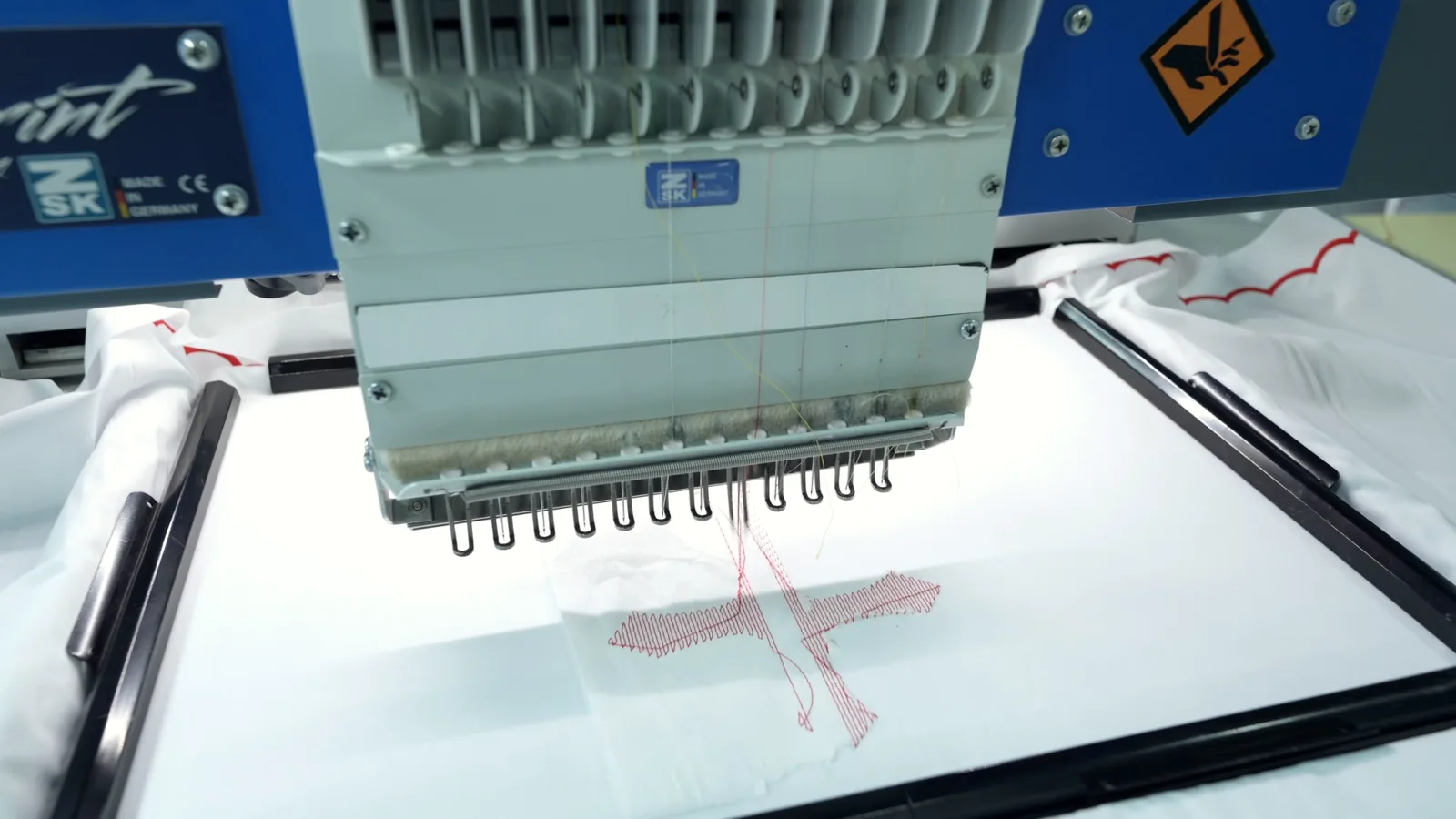
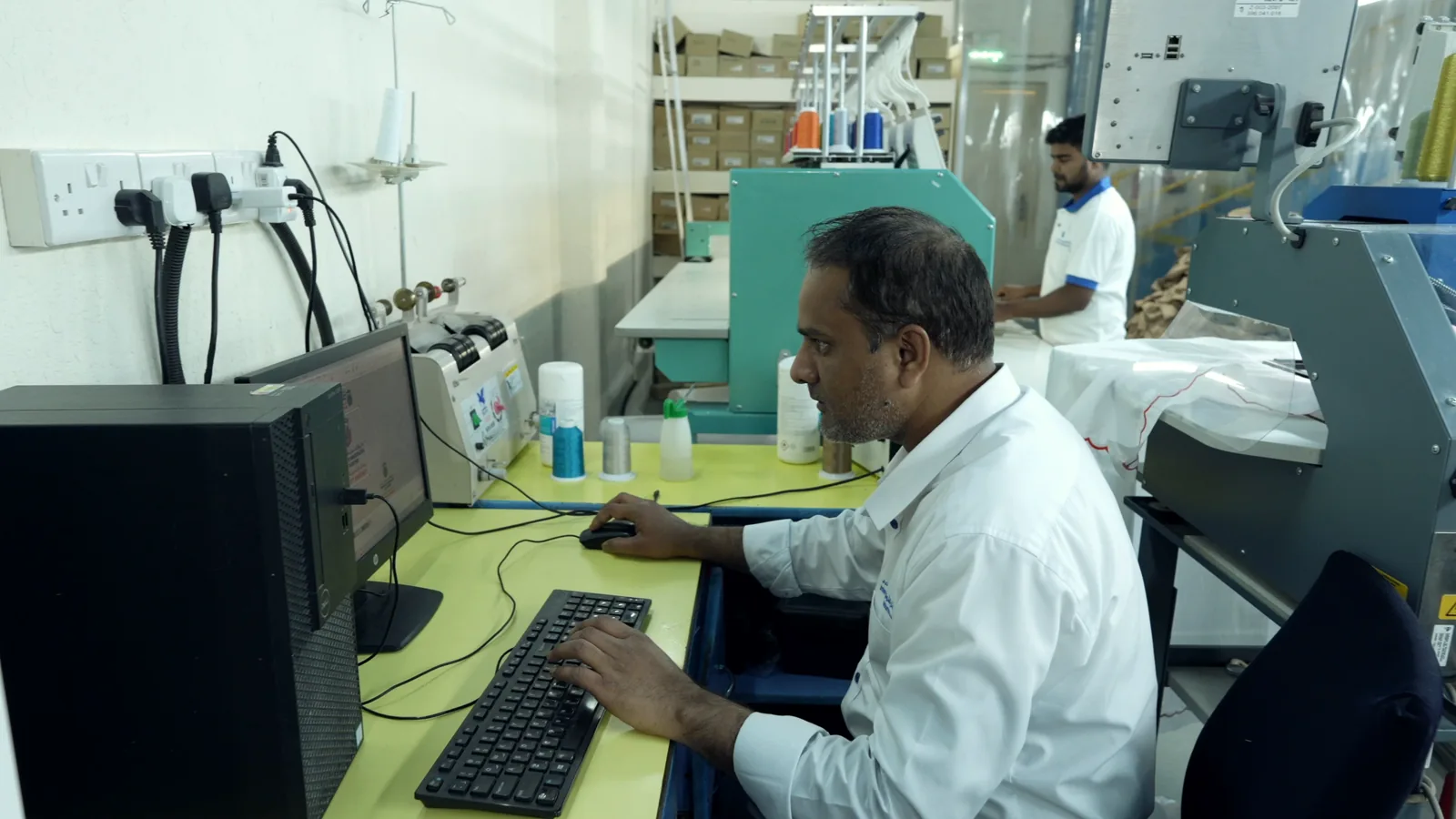
In machine embroidery thread is stitched into the fabric, so the logo has texture and lasts as long as the garment. It suits shirts, polos, jackets, scrubs, chef jackets and caps. Very small text and fine gradients are hard to stitch, so the logo may need simplifying. The logo is first "digitised": turned into a stitch file that tells the machine where each stitch goes.
- Best for: corporate shirts, scrubs, chef jackets, outerwear
- Look: premium, raised
- Durability: excellent
DTF printing
Direct-to-film printing prints the design onto a film and transfers it to the fabric with heat and adhesive. It handles full colour, gradients and fine detail, and works on cotton, polyester and blends. It is practical for small runs and for designs with many colours.
- Best for: t-shirts, event wear, colourful logos
- Look: flat, full colour
- Durability: good with correct washing
Screen printing
In screen printing ink is pushed through a mesh screen, one colour at a time. Set-up takes longer, so it pays off on larger quantities of the same design. Colours are bold and solid.
- Best for: large runs of t-shirts and workwear
- Look: bold, solid colours
- Durability: very good
Side-by-side comparison
- Small orders (under about 20 pieces): embroidery or DTF
- Large orders of one design: screen printing or embroidery
- Many colours or photo-like detail: DTF
- Fine text under a few millimetres: DTF
- Premium, professional look: embroidery
- Garments washed hot and often (scrubs, chef jackets): embroidery
Logo size and placement
A left-chest logo is usually 7 to 10 cm wide; a back print can be much larger. Keep the same size and position on every garment so a team looks consistent. For embroidery, very thin lines and tiny text may need thickening so they stitch cleanly.
Caring for logos
- Wash garments inside out to protect embroidery and prints.
- Avoid ironing directly on DTF or screen prints; iron on the reverse.
- Follow the garment care label for water temperature.
How to choose
For most professional uniforms we recommend embroidery. For colourful event shirts or short runs, DTF. For hundreds of identical t-shirts, screen printing. If you are not sure, ask us to make a sample of the same logo in two methods and compare them side by side. Read more on corporate uniforms and chef uniforms.
Logo finishing at International Uniforms
We do embroidery, DTF printing, screen printing and embossing in-house, on Tajima multi-head and ZSK embroidery machines in our UAE factory, and stitch a sample before every bulk order.
Common questions
Is embroidery or printing better for uniforms?
Embroidery is usually better for professional uniforms because it looks premium and lasts as long as the garment. Printing (DTF or screen) is better for colourful designs, t-shirts and large event runs.
What size should a chest logo be?
A left-chest logo is usually 7 to 10 cm wide. Keep the same size and position on every garment.
Can you put our logo on uniforms in the UAE?
Yes. International Uniforms does embroidery, DTF printing, screen printing and embossing in its own UAE factory.